Builders fall in love with what they can make and forget to ask whether anyone needs it. AI removes the hard part of writing the code, sooo the bottleneck moves somewhere less flattering: knowing who the thing is for, what you are exposing yourself to, and when to stop adding features.
In this episode, David, Egan, Tony and I discuss the angle for a non-technical person standing at the edge of their build wondering what to do next. It is to build small, play, and start with the problem that already bothers you.
Fire Talk🔥 Raw, unfiltered conversations about what AI is actually breaking while everyone races to win, we talk ethics when others only pitch solutions, expose the mess behind ‘moving fast,’ and show you the power you’re ignoring in tools you already own.
Recorded June 18th 2026
AI Summarized Outline
AI makes prototypes nearly free, which means the scarce skills are now scoping, research, security awareness, and finishing. Break the work down like a recipe, solve a problem you actually have, and keep it small enough to complete.
BUILD SMALLER
Builders Build For Themselves And Call It A Market: A personal task manager, a pickup-sports app, and a cafe wifi portal were all technically sound and genuinely useful to their creators, but the demand each one assumed was never really there.
Market Blindness And Lack Of Confidence Are Different Failures: Some projects die because the market was misread; others die because a founder saw a better-funded competitor and quit before learning whether it mattered.
Do Not Pitch A Solution To A Problem Nobody Named: Walking into a business with a finished product is the wrong order; ask about the pain points first and let the customer sell themselves on the fix.
A Prototype Is A Starting Line, Not A Finish Line: AI lets anyone reach a working prototype without writing code, but everything after that — structure, iteration, maintenance — still requires learning what you skipped.
Security Is The Blind Spot Nobody Budgets For: A tool that reads your messages, watches your home, or pulls in a malicious package is a personal exposure, and the average builder is racing past that question to reach “done.”
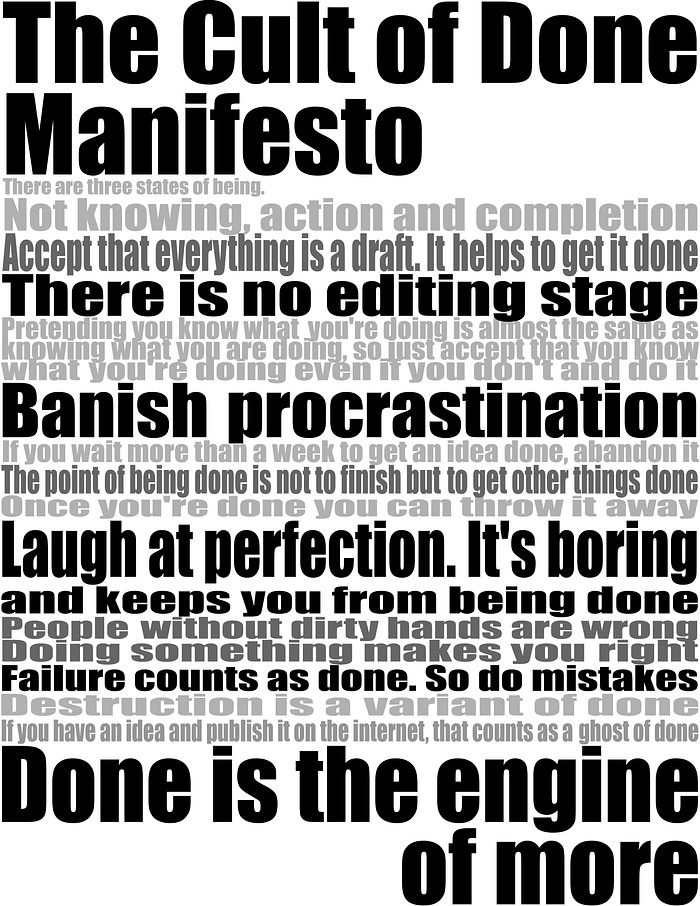
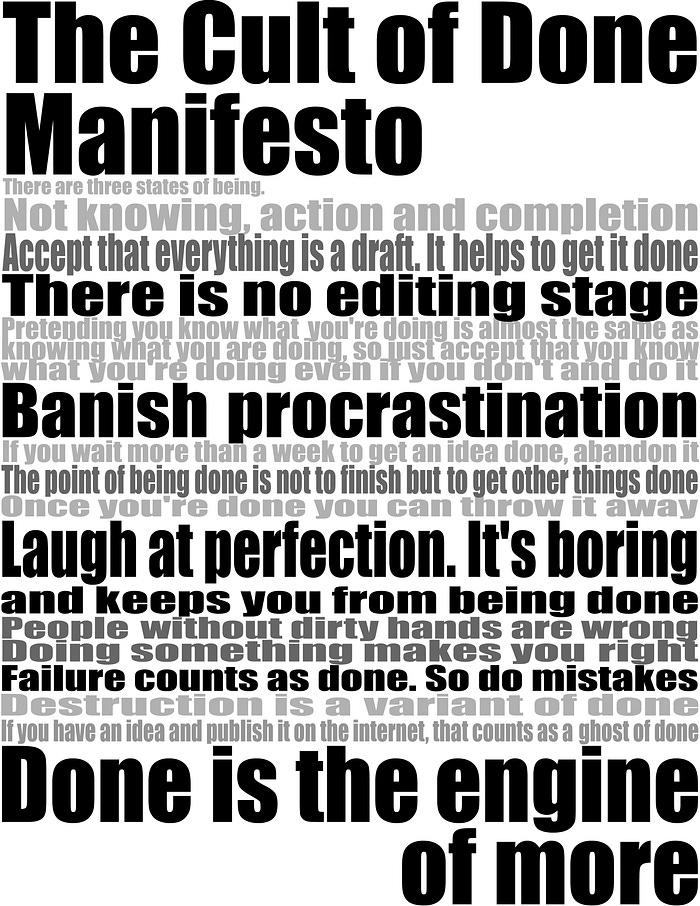
Bias Toward Action Beats Waiting To Be Ready: The cult-of-done posture — everything is a draft, pretending you know what you are doing is nearly the same as knowing, done is the engine of more — keeps unknown unknowns from becoming an excuse.
Treat The Build Like A Recipe, Not A Wish: Break the goal into ingredients and steps, mix the parts separately before combining them, and ask the model what a real engineer would do and in what order.
AI Is Bad At Scoping And Will Quote You Weeks: Models estimate against an imaginary full development team, so asking for level of effort or lines of code produces far more honest planning than asking for a timeline.
Research The People Before You Structure The Code: Identify the actors and personas who will actually use the thing, gather their expectations, and only then decide what the right way to build it looks like.
One Question Cuts Through The Feature Fog: Asking what the single most important thing to work on right now is — not the top three or five — forces the focus that context switching and shiny features destroy.
Play Instead Of Build: The word “build” loads the work with pressure, scale, and an expected payoff; playing is small and cheap, and it is how people actually learn.
Start With What Already Annoys You: The repetitive hour in your day, the inbox you keep checking, the tiny recurring chore — that is the first useful build, and the tips that close the episode all point the same direction: keep it simple, keep it small, do not be scared, and have fun.

Fire Talk 🔥 Guest
Egan Jones | AI Consultant, CEO, Value Creator @ SuperFluidic.AI
Seeing the Future, Deep and Wide Problem-Solving Skillset
Tony Broomes | CEO of Hola Bili, AI Consultant
Skip the paperwork
What do you think of this episode?
Highlighted Definitions Presented in the Video
“Build it and they will come” is a famous business myth that assumes simply creating a high-quality product guarantees customers will automatically find it and buy it. The phrase is actually a misquote from the 1989 movie Field of Dreams (the real line is, “If you build it, he will come”). In reality, modern business relies heavily on marketing, distribution, and validating customer demand; a great product with zero visibility will almost always fail.
Supervisory engineering work, where developers move from creating to verifying AI output, and METR’s 2025 study found experienced open-source developers were sometimes slower with AI because of that extra review and integration burden. source
SDLC means Software Development Life Cycle. It is the step-by-step process teams use to turn an idea into working software: understand the need, plan it, design it, build it, test it, release it, and maintain it.
Supply-chain hacks means attackers are increasingly breaking into a company through something it depends on.
The stats are the scary part: Verizon’s 2026 DBIR says 48% of breaches involved a third party, and 31% started with software vulnerabilities; Sonatype says open-source malware reached 1.233 million malicious packages, with 454,600+ new malicious packages found in 2025; IBM’s 2025 breach report puts third-party/vendor supply-chain compromise at about $4.91M average breach cost. Translation: the weak point is no longer just “your system” it is everything connected to your system. source
The Done Manifesto—usually called The Cult of Done Manifesto—is a set of principles encouraging builders to stop chasing perfection and finish things. Its core idea is that everything can be treated like a draft: complete it, learn from it, and use that learning on the next version instead of staying stuck forever. source
The claim means Claude’s $200 Max plan can provide heavy users with AI usage that might cost up to roughly $8,000 if purchased token-by-token through the API. But it does not literally give you $8,000 in credits or a fixed number of monthly tokens—Anthropic uses five-hour and weekly usage limits that vary based on the model, conversation size, and demand.
Tiny example: a developer running Claude Code throughout the day might use thousands of dollars’ worth of API-equivalent computing while paying only $200. Someone using Claude occasionally would receive far less value because unused capacity does not turn into credits. source
Loop engineering means designing a repeatable system where an AI agent receives a goal, does the work, checks the result, fixes mistakes, and repeats until a clear “done” condition is met—rather than a person giving it one prompt at a time.
Example: tell an agent to build a feature, run the tests, repair anything that fails, and stop only when every test passes.
Think of prompt engineering as writing one good instruction; loop engineering builds the worker, reviewer, rules, memory, and finish line around that instruction. It can reduce human supervision, but poorly designed loops may waste tokens, repeat mistakes, or, approve weak work.
An AI harness is the system built around an AI model that gives it instructions, tools, memory, safety rules, and a process for completing work. The AI is the “brain”; the harness controls what it can access, how it works, how results are checked, and when it should stop.
Human-over-the-loop means people do not approve every AI action; instead, they set the goals, boundaries, and rules the AI must follow, then step in when something important goes wrong. An AI agent can process routine refunds automatically, but a human defines the refund limits and handles unusual or high-risk cases.
3NF, or Third Normal Form. It is a way of organizing database tables so each fact is stored in the correct place and information is not unnecessarily repeated. In simple terms: every column should describe the record’s main ID, not another column.
8.3 naming is an older file-naming rule: up to 8 characters for the file name, followed by a period and up to 3 characters for the extension. example:
CUSTOMER.DATfits the rule, whilecustomer_records.xlsxdoes not.